
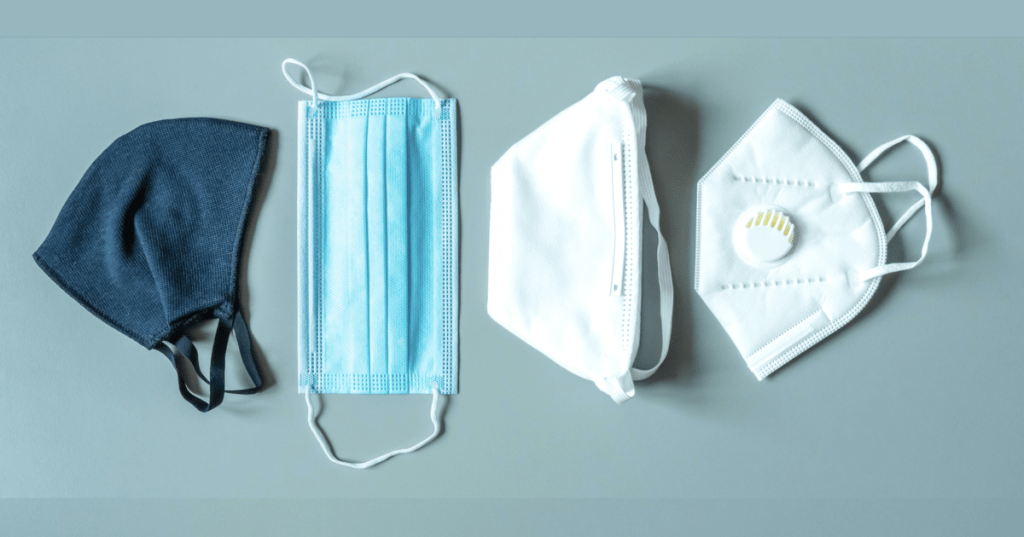
A favorite target for Covid antivaxx misinformation are the facemasks mandated in many countries, aimed at limiting spread of the virus, especially during the initial stages of the pandemic and beyond. Opponents argue the masks are a ridiculous and useless tool against a virus, but are they?
In reality, the masks were neither perfect solutions nor useless. They were one possible means authorities could use to try to stop the virus from spreading, in times when little was known about the virus. Of course, if there was zero reason to think it could do anything, why recommend it? And the answer is of course that that wasn’t the case.
“A virus particle is too small”
By far the most common argument made is that a virus particle is so small it can go even in between the tiny holes of the mask fabric so a mask would stop nothing. For context, a virus particle is between 0.06-0.14 µm (micrometers) in size, while mask pores can be given as 0.3 µm (N95), 5-30 µm (surgical), or 20-100 µm (cloth masks), so it ‘seems’ to make sense, but does it really?
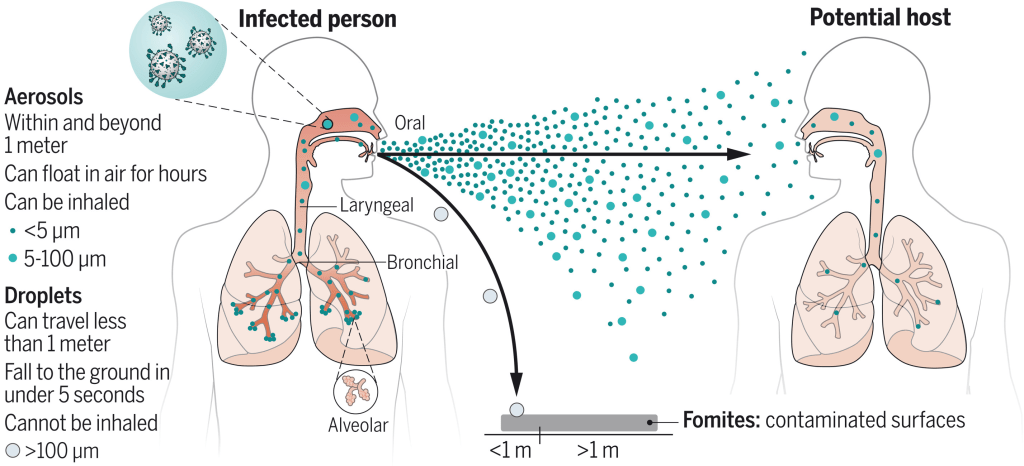
For one, this ignores the fact that even if something is smaller than the holes, that does not mean none of it is caught. But most importantly: Virus particles do NOT travel by themselves! The vast majority if not all of Covid or other virus particles travel in droplets which are much larger than a single virus particle, and would be stopped by most forms of masking to a degree.
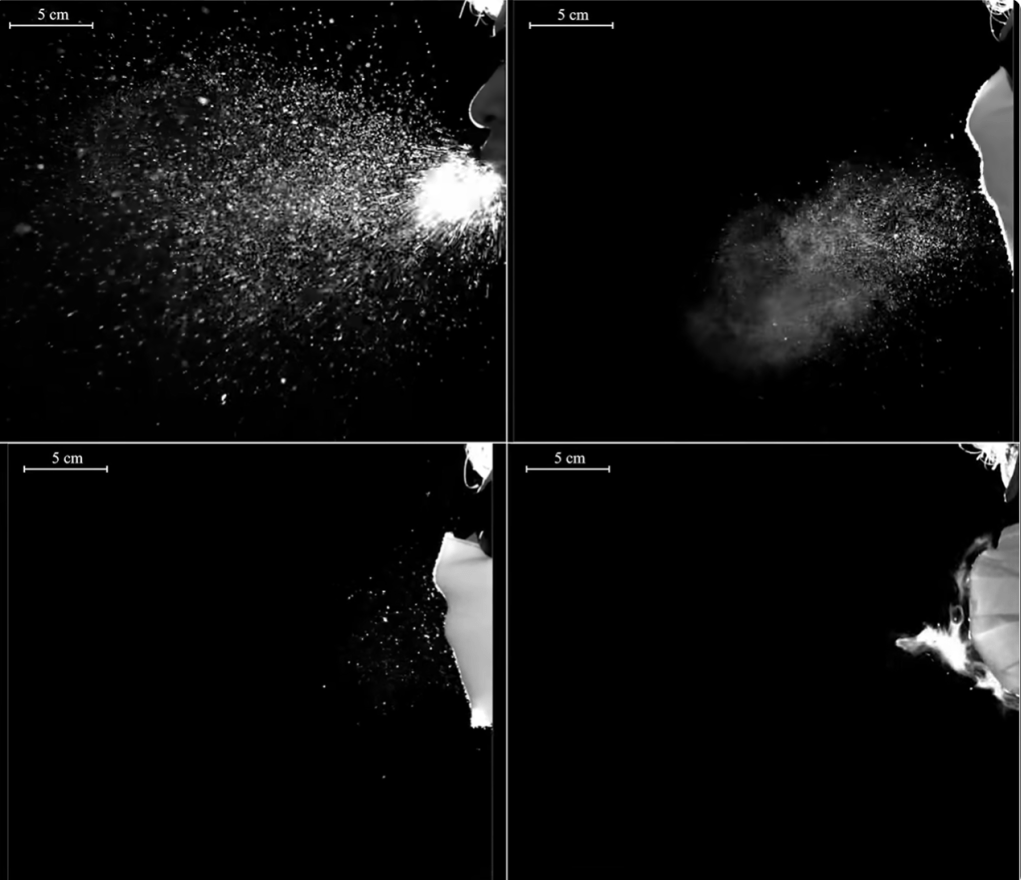
It is trivial to show how stopping all but the smallest of particles would drastically reduce the number of free floating particles in the air, or prevent spreading by reducing the travelled distance by droplets. If wearing masks reduces infections by just 5-10%, it is easy to see why that would be worthwhile, especially in combination with other measures.
“You get infected regardless”
Another argument is that if a population is unavoidably going to be completely infected anyway, masks only slow the spread, do not prevent you from getting sick, and even prevent herd immunity from being achieved as quickly as possible.
First: no, not everyone got infected, and when combined with other measures to stop the virus from spreading, like social distancing and lockdowns, masks are one tool that can help protect vulnerable groups of citizens.
But more importantly, slowing the spread, even if everyone will get infected in the end, is a massive benefit at times where the healthcare system is being absolutely overrun, which in turn leads to cascading negative effects, also for healthcare other than treating Covid. We know this because it was reality in many places, and anti Covid measures were specifically designed to help flatten the peak of infections. For some reason these facts have been wiped from the collective memory of many.
“It starves the user of oxygen”
Fears about masks reducing the oxygen a person wearing one takes in cropped up almost immediately, but are also false. Surgeons wearing them for hours on end during long procedures don’t tap out due to oxygen starvation, and neither did people wearing them during Covid. Research into oxygenation levels with and without masks confirm no impact from mask wearing[2]. Were they annoying? Yes. Harmful? No.
What the science says
Scientific evidence points overwhelmingly to the conclusion that masks, even cloth ones, can limit the spread of a virus through droplets and aerosols[3], especially in situation where humans interact in close proximity to eachother, mechanistically speaking. More difficult to show is the exact effectiveness, which is also in large part dependent on whether people actually wear masks.
In fact, studies showing little to no effect from masks or mask mandates, such as the Cochrane study[4] usually focused on situations and studies where actual mask wearing percentage was low. The problem is not the masks not working, it is people not wearing them. It is vital to separate these two factors when examining mask effectiveness.
Fact vs policy
A final argument made is how recommendations on masks have shifted, especially during the early stages of the pandemic. This is true, and seem to have been caused by shifting knowledge on how the virus was thought to operate and spread, but also out of fear that mass buying of masks by the public would leave places that really needed them like hospitals out of stock.
Beyond these dilemmas, the ‘anti’ crowd also argued masks and other mandates impacted their freedom as a individuals/humans, and felt it might lead to authoritarian overreach from the government, but these are subjective statements I will not go into.
In short
Masks are effective at reducing spread from many viruses through droplets and aerosols released from breathing, talking, coughing and sneezing, but the effectiveness differs between mask types is mostly dependent on the degree to which people actually wear masks/adhere to mandates or advice to wear masks. It is not that complicated.
[1] Bahl P, Bhattacharjee S, de Silva C, et al. Face coverings and mask to minimise droplet dispersion and aerosolisation: a video case study. Thorax 2020;75:1024-1025.
[2] Shein SL, Whitticar S, Mascho KK, Pace E, Speicher R, Deakins K (2021) The effects of wearing facemasks on oxygenation and ventilation at rest and during physical activity. PLoS ONE 16(2): e0247414. https://doi.org/10.1371/journal.pone.0247414
[3] Leung, N.H.L., Chu, D.K.W., Shiu, E.Y.C. et al. Respiratory virus shedding in exhaled breath and efficacy of face masks. Nat Med 26, 676–680 (2020). https://doi.org/10.1038/s41591-020-0843-2
[4] Jefferson T, Dooley L, Ferroni E, Al-Ansary LA, van Driel ML, Bawazeer GA, Jones MA, Hoffmann TC, Clark J, Beller EM, Glasziou PP, Conly JM. Physical interventions to interrupt or reduce the spread of respiratory viruses. Cochrane Database of Systematic Reviews 2023, Issue 1. Art. No.: CD006207. DOI: 10.1002/14651858.CD006207.pub6.
 SignalLessNoise